Personal Care Services in Dallas: Costs & What's Included
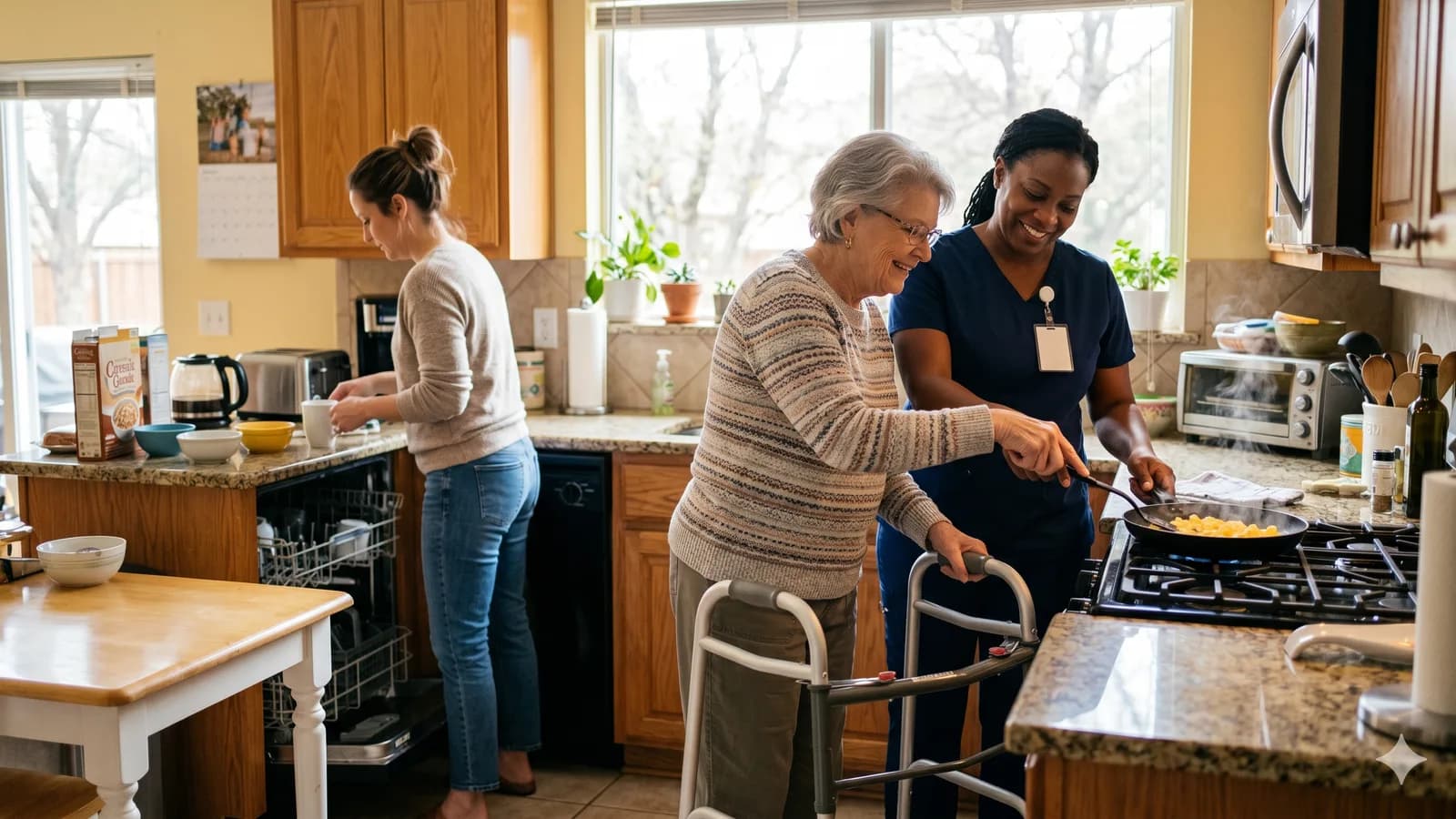
Personal Care Services in Dallas: What's Included, What It Costs, and How to Choose
Dallas families rarely start by searching for "personal assistance services." They usually start with a real-life problem: a parent is no longer bathing safely, a spouse is exhausted from helping with transfers, or an older adult can still live at home but needs help with meals, toileting, dressing, and daily routines.
That is the world of personal care services — non-medical help that keeps a person safe and functional at home in Dallas, Plano, Irving, Garland, or wherever they live.
Quick answer: Personal care services in Dallas include help with bathing, dressing, toileting, mobility, meals, medication reminders, light housekeeping, transportation, companionship, and supervision. In Texas, this work is often provided by agencies licensed under the HCSSA framework, especially the Personal Assistance Services (PAS) category. Personal care is different from skilled home health, and Medicare usually does not pay for it when that is the only help needed.
Need a starting list? Compare Texas HHSC-licensed agencies in the Dallas Home Healthcare Directory, then use this guide to ask better questions.
What personal care services include
Personal care is hands-on support with daily living. It is not hospital-level care, but for many families it is the difference between staying home and moving to assisted living.
A personal care aide may help with:
- Bathing, showering, and grooming
- Dressing and changing clothes
- Toileting and incontinence care
- Transfers from bed to chair
- Walking, mobility support, and fall-risk supervision
- Meal preparation and feeding assistance
- Medication reminders
- Light housekeeping related to the care plan
- Laundry and linen changes
- Transportation to appointments, errands, or adult day programs
- Companionship and social engagement
- Safety supervision for dementia, frailty, or disability
The key word is non-medical. A caregiver can remind a client that it is time to take medication, help them get to the bathroom safely, or prepare a meal. They generally cannot perform clinical tasks that require a nurse, therapist, or other licensed medical professional.
What personal care aides usually cannot do
Families sometimes assume a caregiver can do anything that happens in the home. Texas does not work that way.
A standard personal care aide generally should not be expected to:
- Administer medications beyond reminders (unless specifically allowed under the applicable program and care plan)
- Give injections or insulin
- Perform wound care or sterile dressing changes
- Provide IV therapy
- Manage complex feeding tubes, catheters, or ventilator-related care unless operating under an appropriate skilled-care model
- Provide physical, occupational, or speech therapy
- Make clinical judgments about new or worsening symptoms
If your loved one needs nursing, therapy, wound care, IV medication, post-hospital clinical monitoring, or physician-ordered skilled services, you need home health care, not just personal care.
For the licensing breakdown, see Understanding Texas HCSSA Licenses.
Texas licensing: PAS vs. skilled home health
Texas licenses home care and home health providers through the Home and Community Support Services Agency (HCSSA) system. The main categories Dallas families encounter are:
- PAS — Personal Assistance Services: non-medical personal care, homemaker support, companionship, and supervision.
- LHHS — Licensed Home Health Services: skilled services licensed by Texas but not necessarily Medicare-certified.
- L&CHHS — Licensed and Certified Home Health Services: skilled home health agencies that are both Texas-licensed and Medicare-certified.
- Hospice: end-of-life comfort care under hospice rules.
The practical meaning: if your parent needs bathing, dressing, meals, mobility help, and supervision, a PAS agency may be enough. If they need wound care, therapy, injections, IV therapy, or Medicare-covered skilled home health, look for the appropriate LHHS or L&CHHS provider.
You can verify any agency's license category in the Texas TULIP provider search.
What personal care costs in Dallas
Public rate data should be treated as a starting point, not a quote. Industry benchmarks for 2025–2026 place non-medical caregiver rates in Texas at roughly $21–$30/hour for marketplace listings, with licensed agency rates often higher because they include supervision, payroll taxes, insurance, backup staffing, and regulatory compliance.
A practical planning range for Dallas families:
| Weekly schedule | Typical use case | Cost pattern |
|---|---|---|
| 8–12 hours/week | Errands, meals, companionship, light reminders | Modest private-pay support |
| 20 hours/week | Bathing, meals, transportation, supervision several days/week | Common starting point |
| 40 hours/week | Weekday support while family works | Full-time daytime care |
| 24-hour care | Dementia wandering, major fall risk, end-of-life support | Premium private-pay care |
Ask every agency about minimum shifts, weekend rates, holiday rates, cancellation policies, mileage, care-plan fees, and what happens when the regular caregiver is unavailable.
Does Medicare pay for personal care?
Usually, no.
Medicare can cover qualifying home health services when the person is under a provider's care, is homebound, and needs intermittent skilled nursing or therapy from a Medicare-certified agency. Medicare does not pay for 24-hour care at home, meal delivery, homemaker services unrelated to the care plan, or custodial personal care when that is the only help needed.
This is one of the biggest surprises for Dallas families. A parent may clearly need daily bathing help, but that need alone does not trigger Medicare coverage.
Can STAR+PLUS or Medicaid help?
It can, for eligible people.
Texas Medicaid's STAR+PLUS program serves many adults with disabilities and people age 65 or older. STAR+PLUS HCBS may include personal assistance services, respite, adult day services, adaptive aids, nursing services, and home-delivered meals when program criteria are met.
Families should not assume Medicaid will authorize every hour they want. Eligibility, functional assessment, managed-care plan rules, and service planning all matter. Start with your Medicaid managed-care plan, the Dallas Area Agency on Aging, or Texas HHS resources, then compare agencies that accept the relevant program.
For a broader payment overview, read How to Pay for In-Home Nursing Care in Texas.
How to choose a personal care agency in Dallas
Ask these questions before hiring:
1. What HCSSA service categories do you hold?
A PAS agency may be enough for non-medical personal care. Skilled needs require the right home health category. Verify in Texas TULIP.
2. What tasks are included in your personal care plan?
Ask specifically about bathing, toileting, dementia supervision, transportation, meal preparation, transfers, and medication reminders.
3. What tasks are not allowed?
A trustworthy agency should clearly explain when a nurse or therapist is required.
4. How do you train caregivers?
Look for training in transfers, fall prevention, dementia, infection control, emergency response, and documentation.
5. Where are your caregivers based?
Dallas traffic matters. A caregiver commuting across the metro can make short shifts unreliable.
6. What is your backup plan?
Backup coverage is one of the main reasons families choose an agency over hiring a private caregiver.
7. How do you communicate with family?
Ask about daily notes, family portals, supervisor check-ins, and after-hours escalation.
8. What is the full written cost?
Get minimum shifts, weekends, holidays, travel charges, cancellation rules, and deposits in writing.
For a full interview list, see 10 Questions to Ask Before Hiring a Home Health Agency in Dallas.
Private caregiver vs. agency
Hiring a private caregiver can work when the need is light, stable, non-medical, and the family can handle screening, payroll, taxes, backup coverage, and supervision.
An agency is usually safer when:
- Care is needed daily or at odd hours
- Dementia, wandering, or fall risk is present
- Transfers are physically demanding
- Family cannot manage backup coverage
- The client has complex medical conditions
- Documentation is needed for long-term care insurance, Medicaid, or VA-related benefits
- The family wants state-licensed agency oversight
The bottom line
Personal care services are the backbone of aging at home in Dallas. They do not replace nursing, but they often prevent falls, reduce caregiver burnout, improve daily routines, and keep a person safely at home longer.
Start by matching the care model to the actual need. If the need is bathing, dressing, meals, homemaking, mobility support, and supervision, compare PAS agencies. If skilled care is part of the picture, include an LHHS or L&CHHS agency in the conversation.
Browse the Dallas agency directory, then verify licensing, services, pricing, and backup coverage before signing.
Related Dallas guides
- Home Care in Dallas, TX
- 24-Hour Home Care in Dallas
- How to Verify a Texas Home Care Agency License
- Agency vs. Independent Caregiver in Dallas
Frequently asked questions
What are personal care services in Dallas?
Personal care services are non-medical services that help with daily activities such as bathing, dressing, toileting, transfers, meals, medication reminders, transportation, companionship, and supervision.
Does Medicare cover personal care in Dallas?
Medicare usually does not cover personal care when it is the only care needed. Medicare may cover qualifying intermittent skilled home health, but ongoing custodial or personal care is typically covered through private pay, Medicaid/STAR+PLUS if eligible, long-term care insurance, VA-related benefits, or family funds.
What HCSSA category should a Dallas personal care agency have?
Most non-medical personal care agencies hold the PAS category. If skilled nursing, therapy, or Medicare-covered home health is involved, look for the appropriate LHHS or L&CHHS category.
How much does personal care cost in Dallas?
Industry benchmarks for 2025–2026 place non-medical caregiver rates in Texas at roughly $21–$30/hour for marketplace listings, with licensed agency rates often higher. Costs vary by supervision model, backup coverage, schedule, and care complexity.
Where should I start?
Start with a licensed agency directory, confirm the HCSSA category, ask for a written care plan and pricing, and compare at least two or three agencies before committing.